
As the year draws to a close, many women find themselves managing an ever-growing list of responsibilities. We organize, anticipate, and nurture—often while navigating the physiological demands of our own changing bodies.
At Gingko, one of acupuncture's impacts is also one of its simplest: for a little while, there is nothing you need to do beyond receiving.
And while the experience may feel remarkably quiet, beneath the surface, acupuncture engages some fascinating physiological processes.
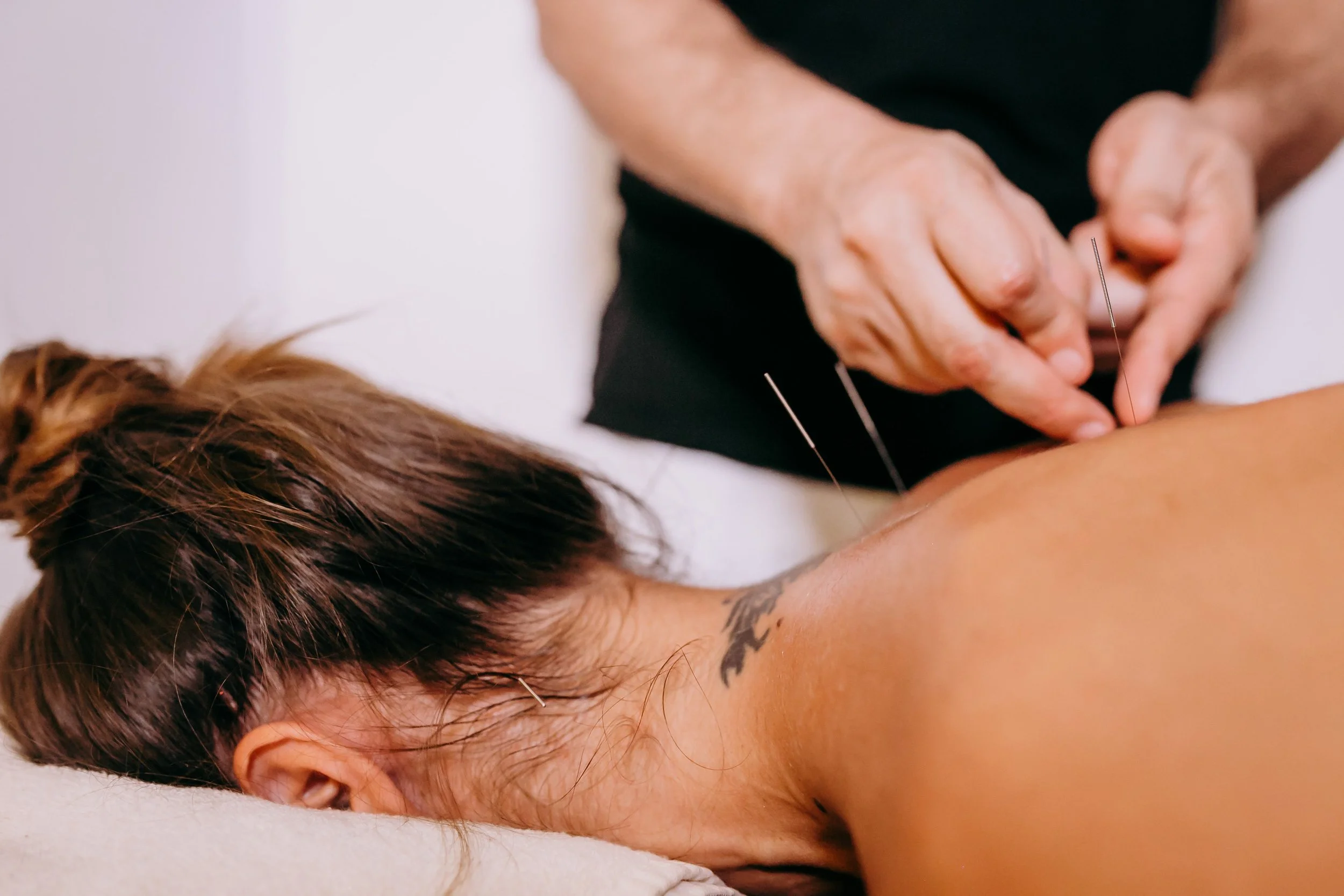
Shifting the Nervous System Toward Restoration
Our autonomic nervous system continuously adjusts how the body responds to its environment. The sympathetic branch prepares us for action, while the parasympathetic branch supports digestion, recovery, and restoration.
Both are essential. The goal isn’t to eliminate our stress response, but to preserve the flexibility to move between activation and rest.
Research suggests that acupuncture can influence autonomic regulation through sensory nerve stimulation and signaling within the central nervous system. Some studies demonstrate changes in heart rate variability, a measure that offers insight into autonomic function, as well as activity in neural networks involved in stress regulation.
These effects may help explain why patients often describe feeling profoundly relaxed after treatment—and why acupuncture is being studied for sleep disturbances, anxiety, and other conditions involving heightened physiological arousal.
Rest is not simply the absence of activity. It is an active physiological state in which important processes of repair and regulation can occur.
Hormonal Health Is Also Nervous System Health
For women, the relationship between the nervous system and hormonal health is particularly important.
Our reproductive hormones communicate continuously with the brain, influencing sleep, temperature regulation, mood, metabolism, and our responses to stress.
During perimenopause and menopause, fluctuating estrogen and progesterone can affect these systems, contributing to disrupted sleep, heightened stress sensitivity, hot flashes, and changes in emotional resilience.
Acupuncture offers a complementary approach to supporting women through these transitions. Its effects on neural signaling, pain processing, and autonomic regulation may help ease certain symptoms, even when it does not directly change circulating hormone concentrations.
Rather than thinking of acupuncture as simply raising or lowering a particular hormone, we find it more useful to consider its potential to support the regulatory systems through which hormonal changes are experienced.
This is one reason acupuncture fits so naturally within our integrative approach to women’s health.
Microcirculation: The Importance of Blood Flow in Women’s Health
One of the less appreciated aspects of acupuncture is its influence on microcirculation—the movement of blood through our smallest vessels, where oxygen, nutrients, and signaling molecules are exchanged with surrounding tissues.
Experimental research suggests that acupuncture can increase local tissue perfusion through mechanisms involving sensory nerves, vascular responses, and the release of signaling molecules such as nitric oxide.
Why does this matter for women?
Microvascular function is relevant throughout the body, including the reproductive organs, pelvic tissues, skin, muscles, and brain. Estrogen itself plays an important role in vascular function, and the hormonal changes of midlife can influence endothelial health and blood vessel responsiveness.
Healthy microcirculation supports tissue nourishment, oxygen delivery, metabolic exchange, and repair. Women's cardiovascular physiology relies uniquely on microcirculatory cues.
The Gift of Being Cared For
Perhaps what we value most about acupuncture, however, is something that cannot be fully captured by a laboratory measurement.
Women are so often the architects of their own health care. They research, coordinate, monitor, advocate, and implement. Even the pursuit of wellness can become another responsibility.
Acupuncture offers a different experience.
You arrive. You settle in. Your practitioner listens, assesses, and creates a treatment tailored to your needs.
You are simply invited to receive.
We consider it a privilege to create this sanctuary for our patients—a space where attentive, individualized care is offered without conditions.
As practitioners, we hold both the scientific complexity of the treatment and the simplicity of the experience with equal respect.
A December Invitation
During a season so often defined by giving, we invite you to consider the value of receiving.
Whether you are navigating hormonal transitions, managing stress, experiencing disrupted sleep, or simply seeking a restorative pause, acupuncture may offer an opportunity to support your body’s regulatory systems without relying on your mental load to orchestrate it. Caring for you, who care for so many, remains one of the core delights of our practice, more than 2 decades in.
From all of us at Gingko, we wish you a season of restoration, connection, and well-being.
Warmly, The Gingko Team
For scheduling purposes, please note we will be out of the office for our annual holiday break: Dec 24 resuming care January 5th